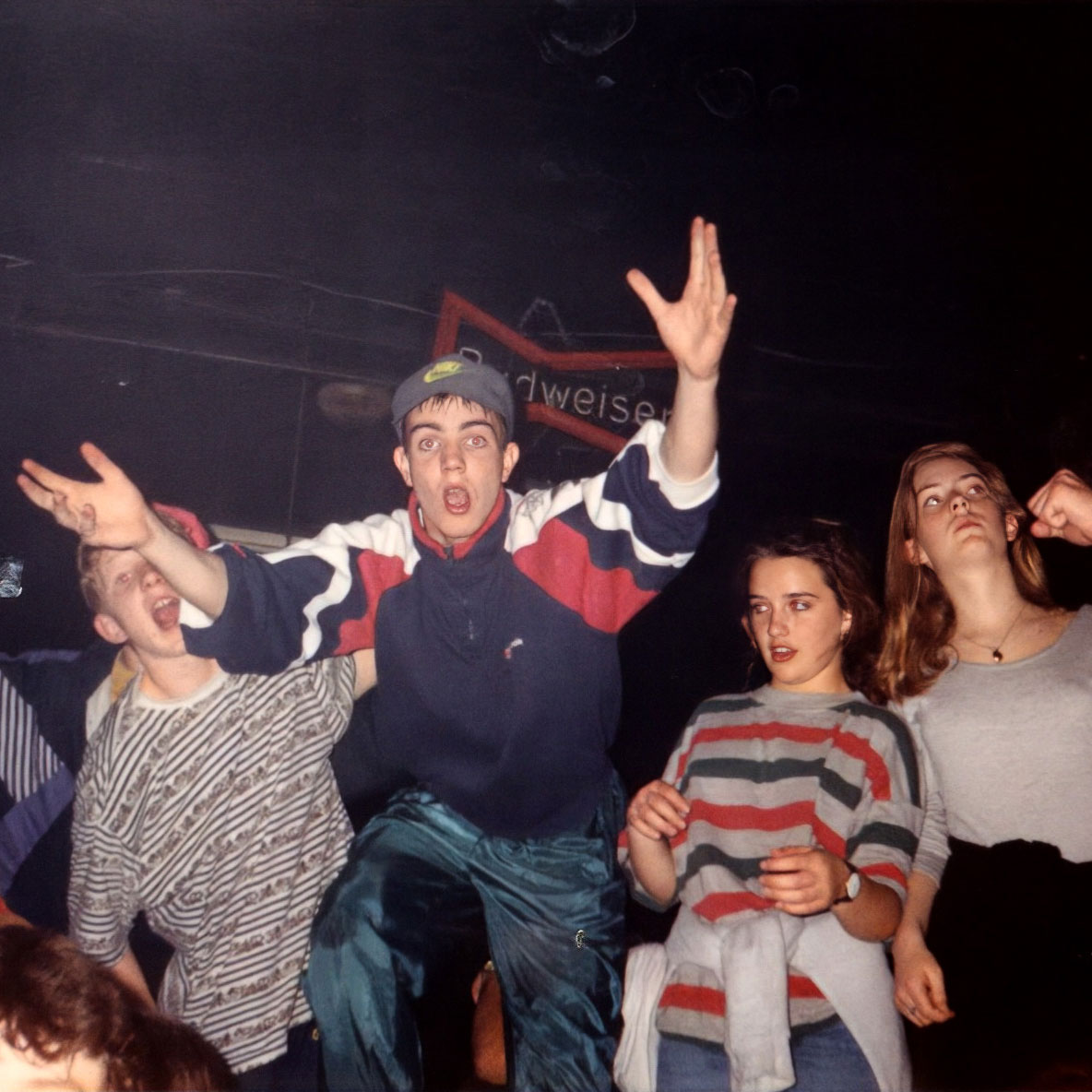
It has been such a pleasure to work with At The Library, a collaboration between Rule of Threes and Sefton Libraries, to archive and celebrate the legendary but lost nightclub Quadrant Park. I want to tell the story of this project for two reasons, to share the way the project unfolded, but also to record it for myself so I always have a reminder.
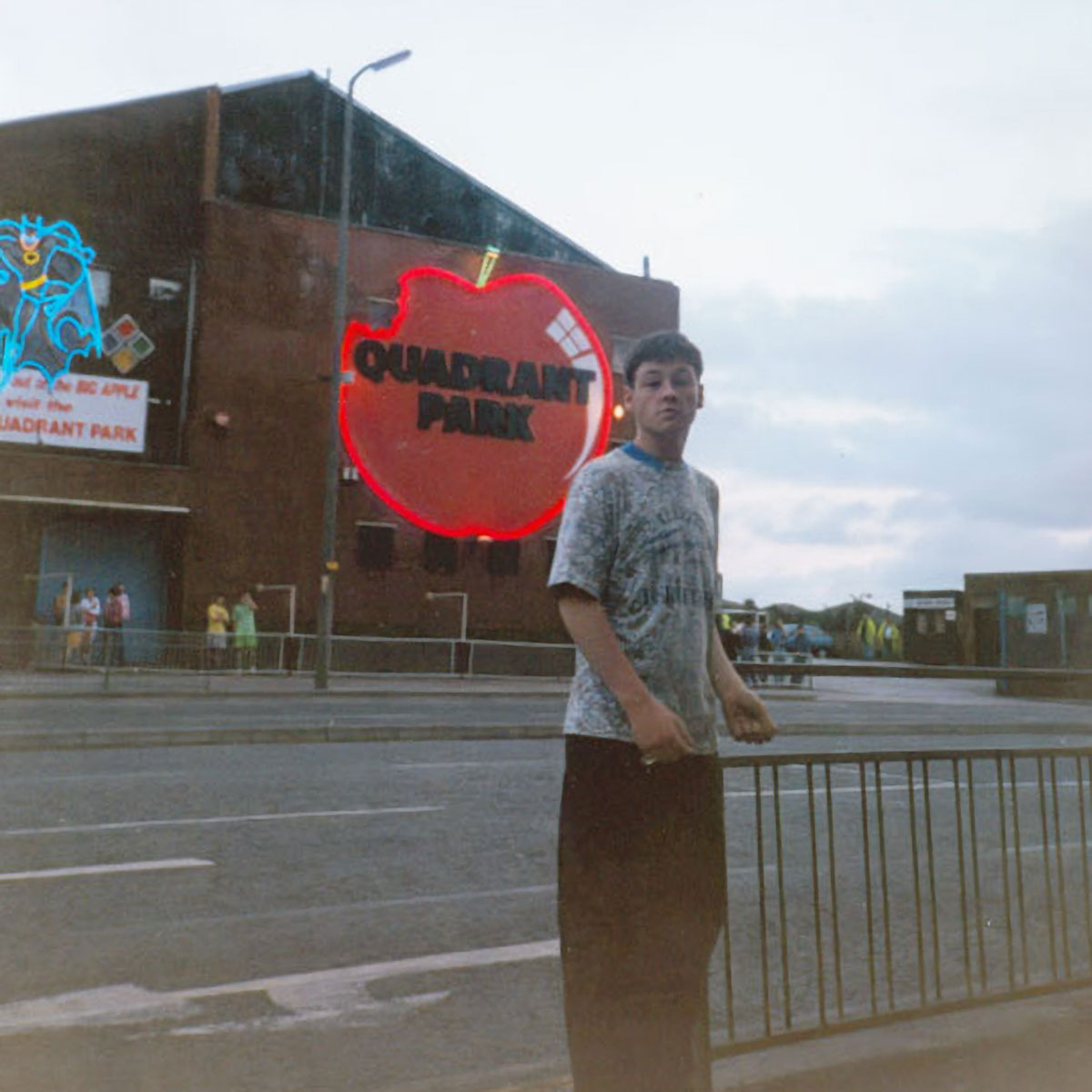
‘The Quad’ was in Bootle (which is part of North Liverpool) and was one of the most important clubs in the region, if not the whole country, for a brief period in 1990-91, before getting demolished in 1992. I used to drive past the site of the site of the Quad on my way to work with the libraries on things like the Listening in… Project and ended up having a chat with At the Library about it’s significance and relationship to local history. Local history of this part of Liverpool is often linked things like the blitz and the demise of the docks, so we all decided it would be great to celebrate the heyday of the club and its significance. We wanted to try to bring together some of the related Quad material, like photos and mixtapes, that was floating around on the web in places like the Quadrant Park Reunions Facebook group.
We received funding from National Lottery Heritage Fund and Historic England for the project and set about getting to know the Quad community to figure out how we could work together best. Alongside working with those who went to the Quad, now in their 50’s and 60’s, we also wanted to work with local young people to share this history and help them learn some new skills. So the project ended up with two strands, the archival strand and the young person’s strand. I was lead artist on the archival side, and Melissa Kains was lead artist on the young person’s side. Melissa ran audio production and DJing workshops in Bootle, and we also ran riso workshops and a project with the local FE provider, Hugh Baird College (which was a lovely circular moment, as the founder DJ, Mike Knowler, was a lecturer there while also DJing at the Quad).
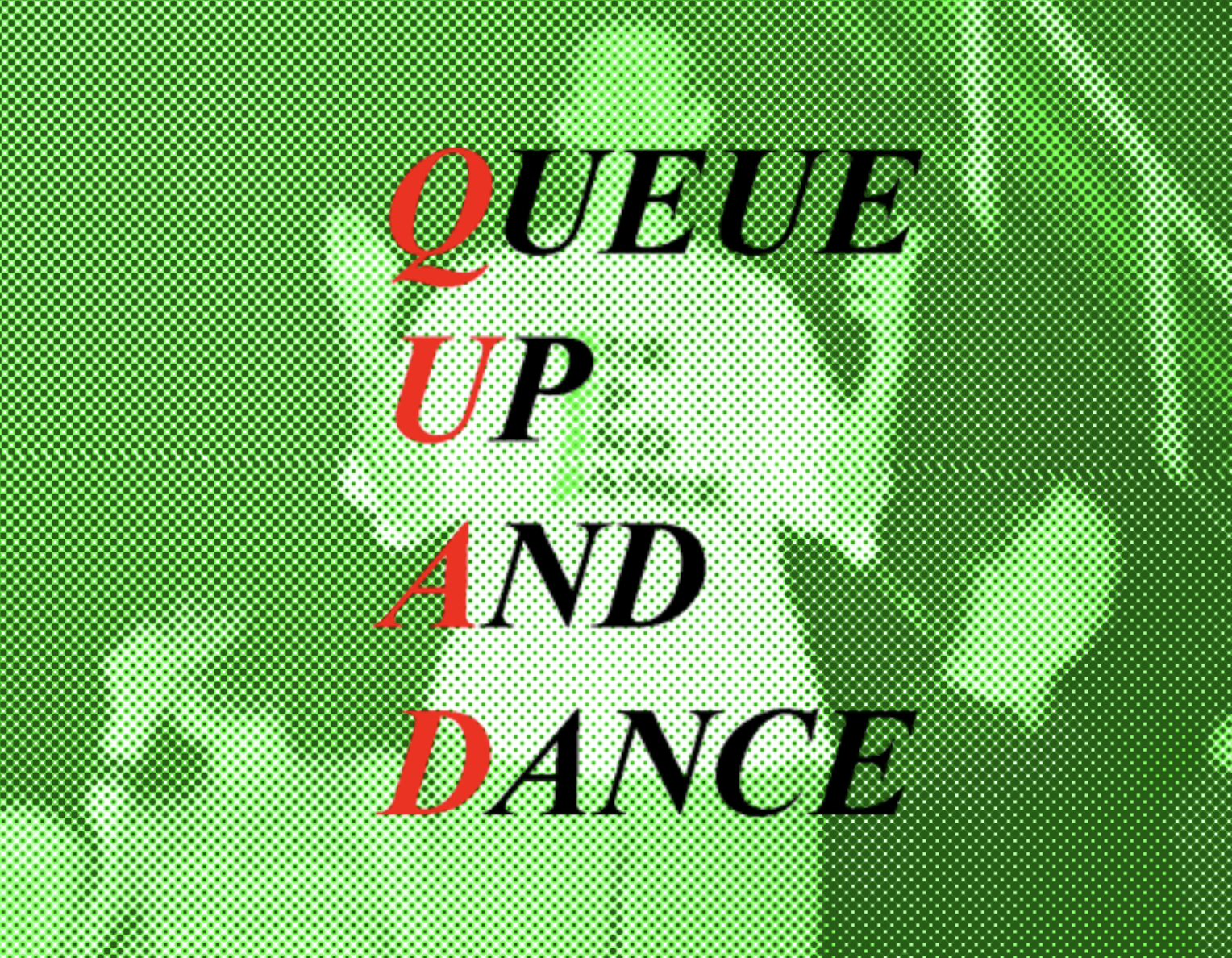
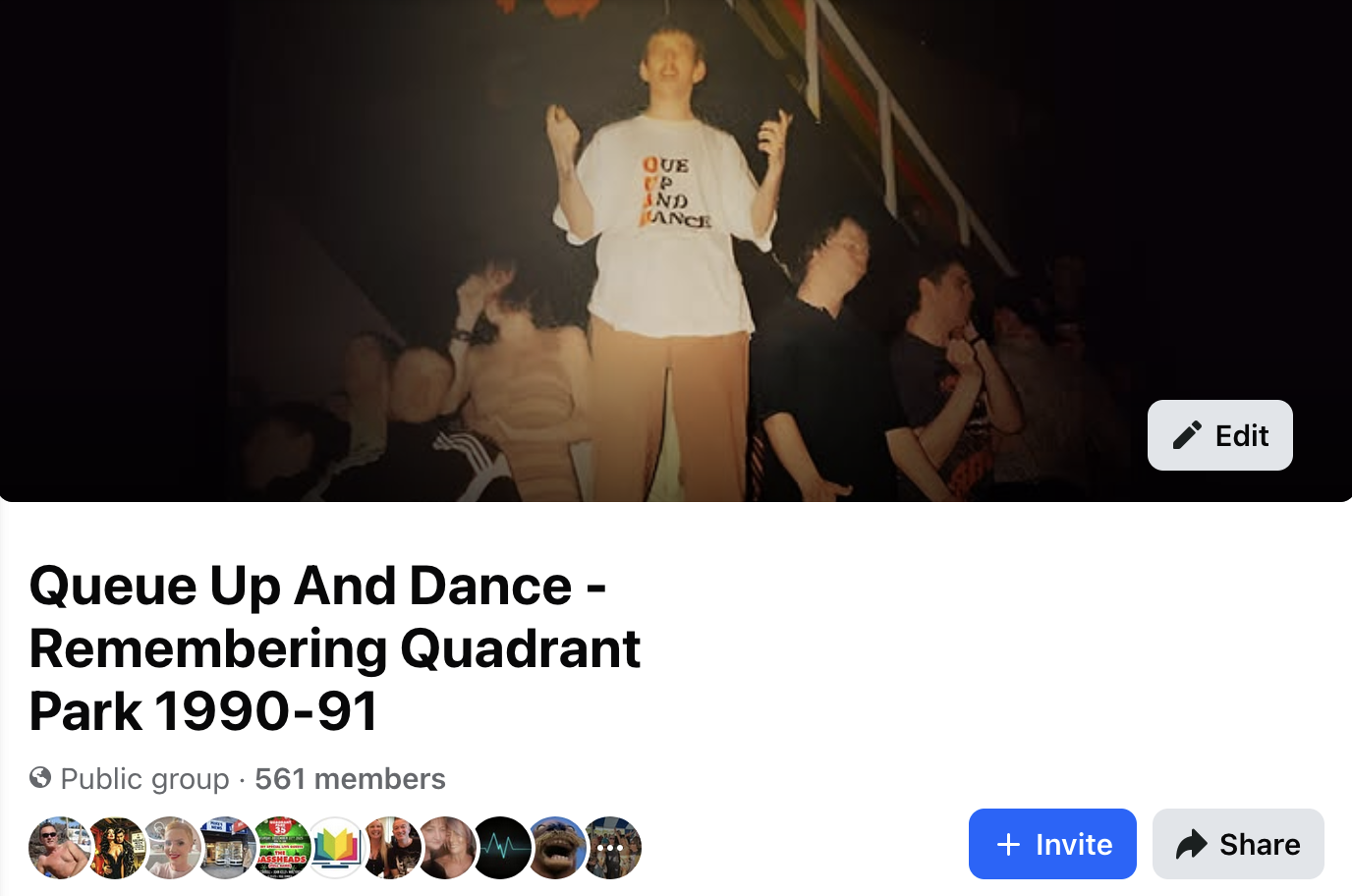
The archival side actually began before we received funding, as I felt that it was important to get to know the community as quickly as possible and introduce the project. The Quadrant Park Reunions Facebook group has been going for ages, and these people, along with the original DJ’s Andy Carroll and John Kelly, are really the people who have kept the spirit of the Quad alive for the last 35 years. It is their history. I actually never went, so was clearly an interloper into this community. I needed to make sure they knew who I was, what our intentions were, and what the project was all about, so I went ahead and set up a Queue Up And Dance Facebook group. Incidentally, the title ‘Queue Up And Dance’, comes from a t-shit that I saw in a photo on Quadrant Park Reunions. After a bit of investigation I discovered the t-shirt was made by a guy called David Bleasdale. I contacted him via Facebook and asked him if it was ok to use it as the project title and he was very supportive. The Queue Up And Dance Facebook group was important as we wanted to focus on the history of the club and archival material. The Quadrant Park Reunions page has loads of memes, tunes, and other bits and bobs, which are great but not really relevant to the project. The Q.U.A.D Facebook group attracted some attention and before long we had a few hundred people following the project.
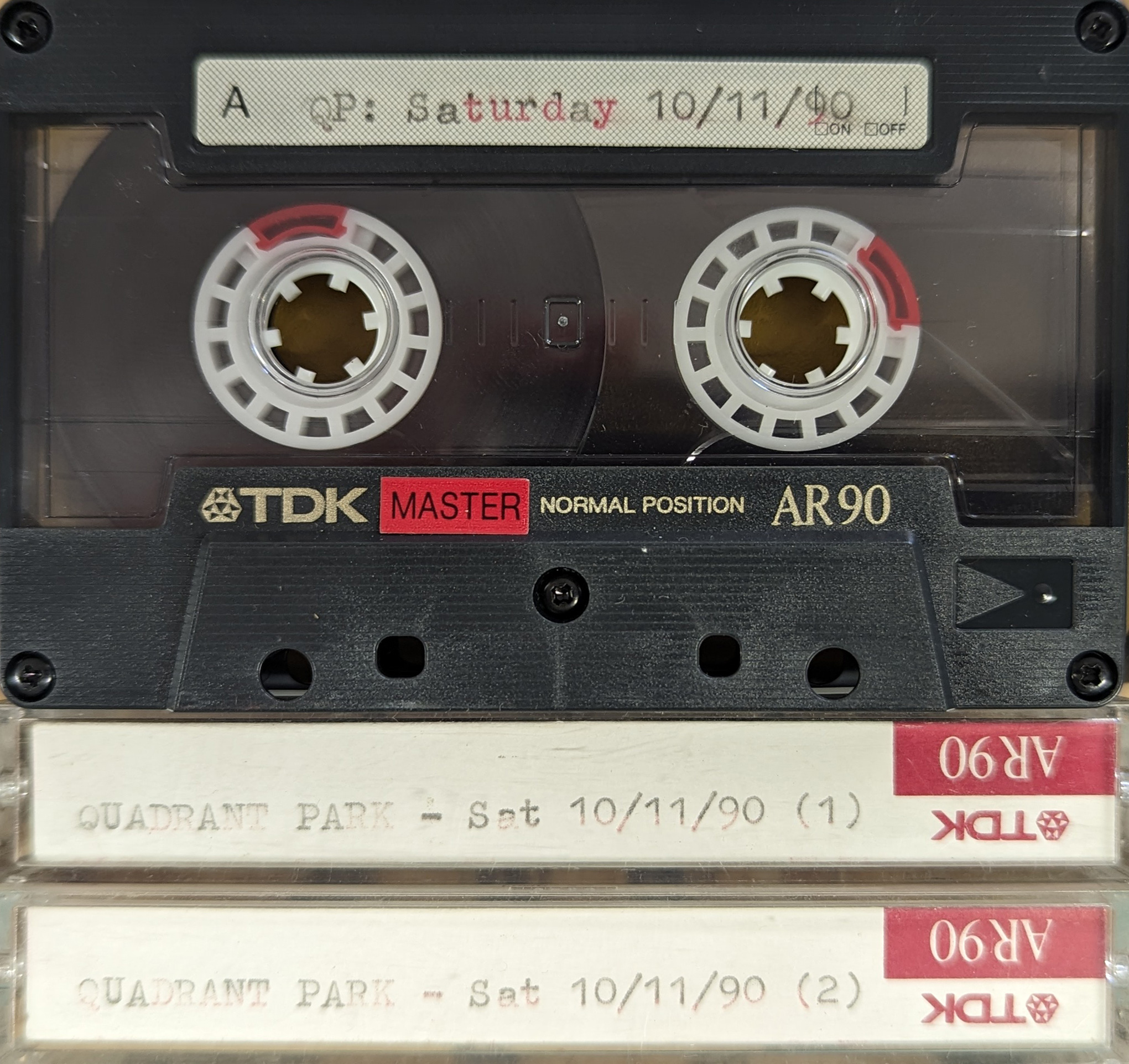
One of the other really important things for the project was the support of the original DJs. Early on I contacted Mike Knowler, who DJ’d at places like The State and Hard Dock, and is a legend in Liverpool clubbing, and he was, right off the bat, really supportive. On one of my first visits to Southport to see him he gave me a box of over 80 C90 cassettes recorded straight from the mixing desk at the Quad! Digitising these and sharing them with the community early in the project was a great way to show what we wanted to do, and also the support from Mike really helped to legitimise the project.
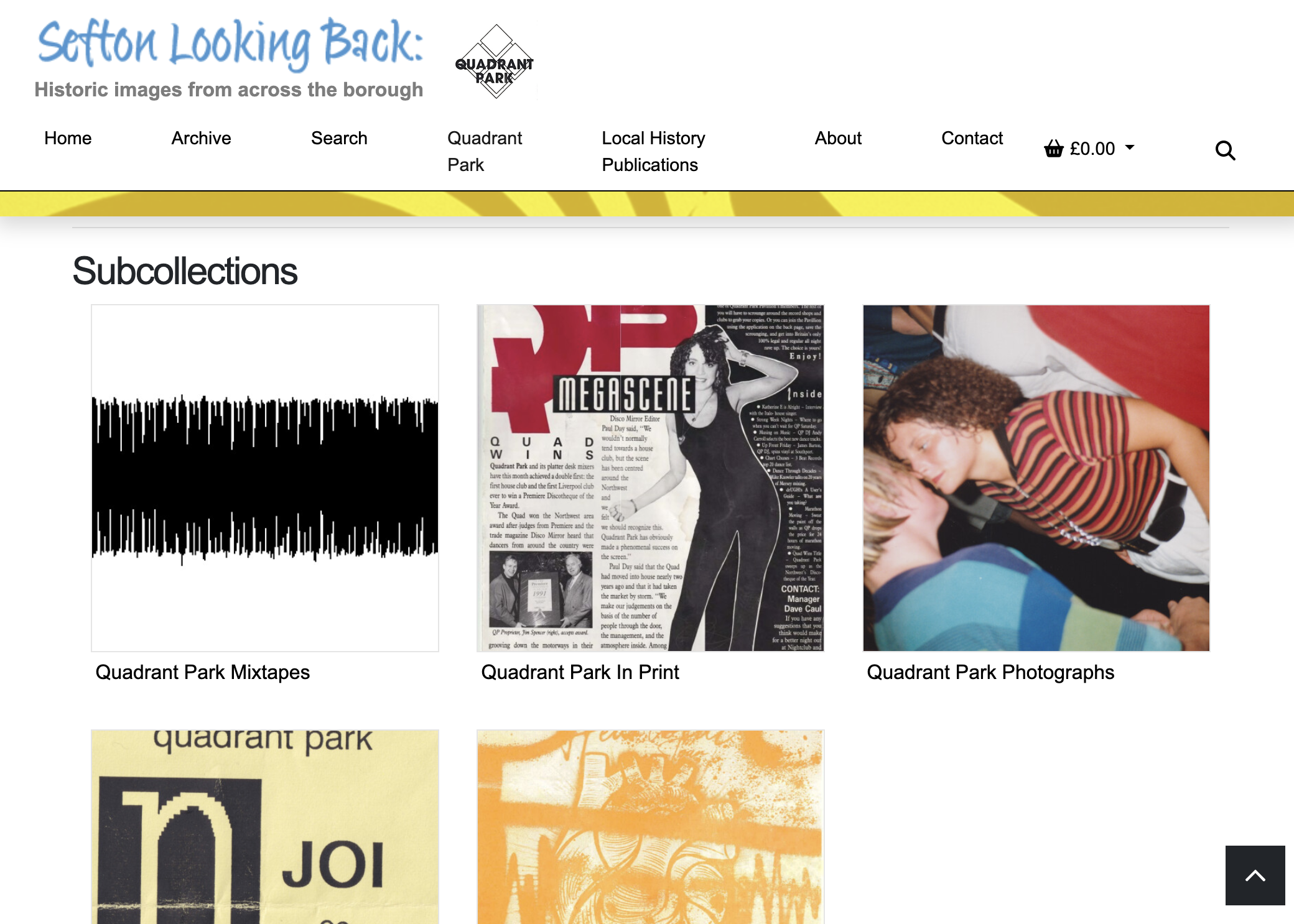
To begin gathering material for the archive we invited the community to some events at Bootle library. We had a go at mapping the Quad, as lots of people had mentioned that they danced in specific places. I thought it might be nice to do a map of the inside so I got some plans from Sefton Planning Office, and we set a date. Some people turned up, we looked at the plans and had a chat about where stuff was etc, but the consensus was that the community was generally pretty wraped up in their own lives, with family etc, and these planned events were, perhaps, not the best way of engaging with them. Instead, we invited people to just come by with any material we could copy for the archive. This worked better and we had people bringing in carrier bags full of photos and other stuff to share. After a few months we had lots of mixtapes, flyers and photos, so were able to upload them to Sefton Looking Back – the Sefton Libraries digital archive. It’s great to see this material alongside ‘proper’ history on the site and it will be kept safe there as long as the libraries operate. This was another important aspect, there is already stuff online relating to the quad, but it is on sites that might go down, or in formats that are outdated. On the Sefton Looking Back site it will be available for a significant length of time, all being well.
One thing that came out of the Quad sessions in the libraries was that we met some people from the community who were excited to be part of the project and wanted to help shape it. After the archive, they helped us decide on the next two elements of the project, the exhibition and the book.
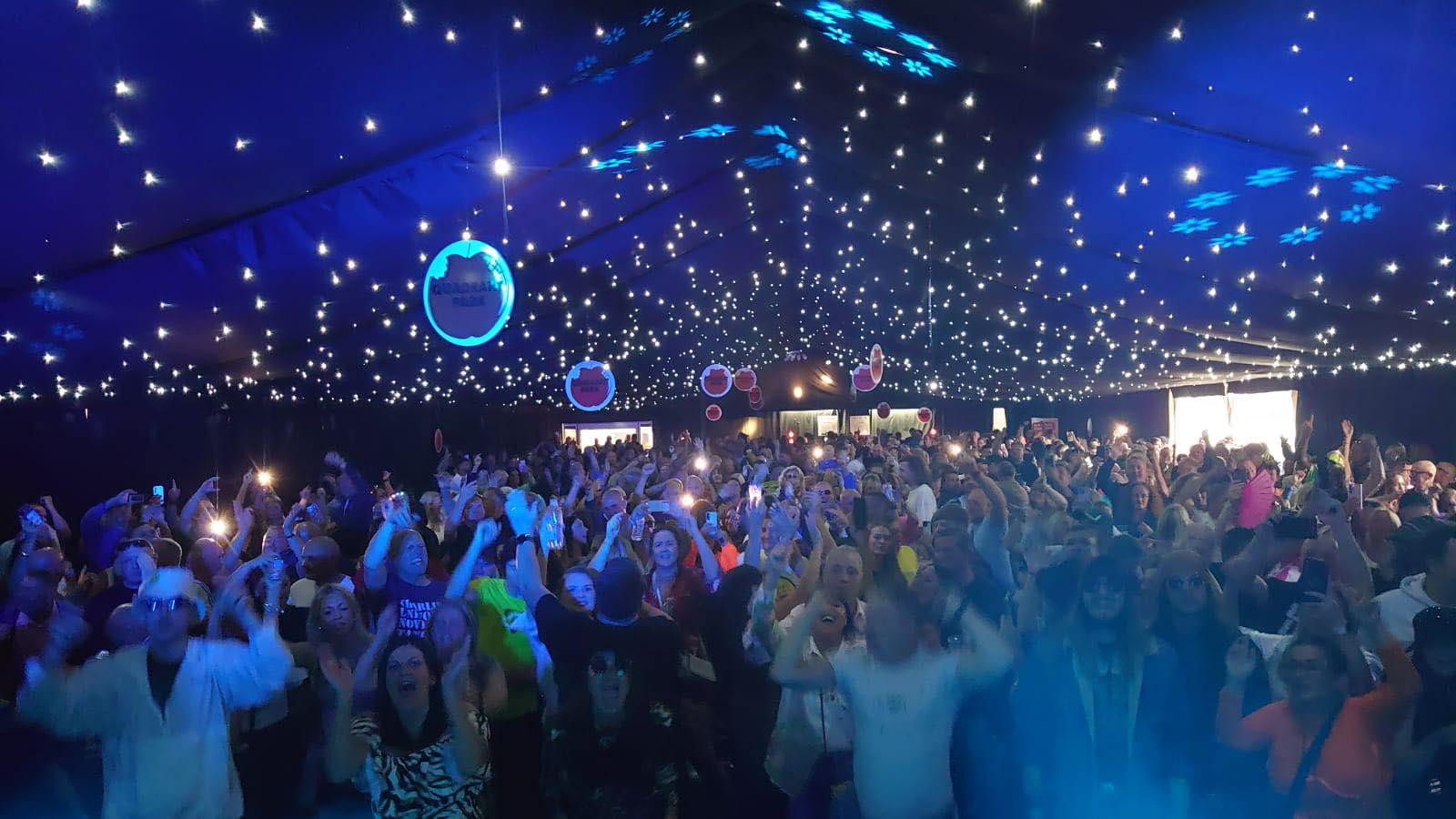
Having some sort of public event sharing the archived material was always part of the plan, but we wanted to do it in the right way. There were two approaches available to us. The first was to do a ‘proper’ exhibition, in one of the libraries or a similar sort of space. I think this was popular for some as the format and institutional setting elevated the Quad and legitimised it as a significant cultural moment. The second approach was to try to do something more embedded in the Bootle community. Like lots of things in this project, the answer came organically via conversations and connections within the local community itself. Over the road from Bootle Library is a shopping centre called The Strand. It is, like lots of these place, quite empty and past it’s best. To one side there is a big, open car park that has been converted into a community event space, with a boxpark selling food and drink alongside places to sit, watch, drink and eat. They have big concerts each year, featuring people like Tom Jones and the Sugababes. It is funded by the local authority via government levelling up grants. In May of 2025 they were hosting a Fringe Festival and during a conversation about the project, it was floated that we might be able to work together to be part of it. We thought it would be great to bring the project back to Bootle, and exhibit some of the archive on site. As the venue also had a 600 capacity tent for the festival, we also worked with the original DJ’s who put on a Quadrant Park ‘Back to Bootle’ night, celebrating 35 years since the club really took off. So, on the Saturday of the late May bank holiday weekend we invited the public to the site to see some of the archival material, to be followed by a rave in the tent later.
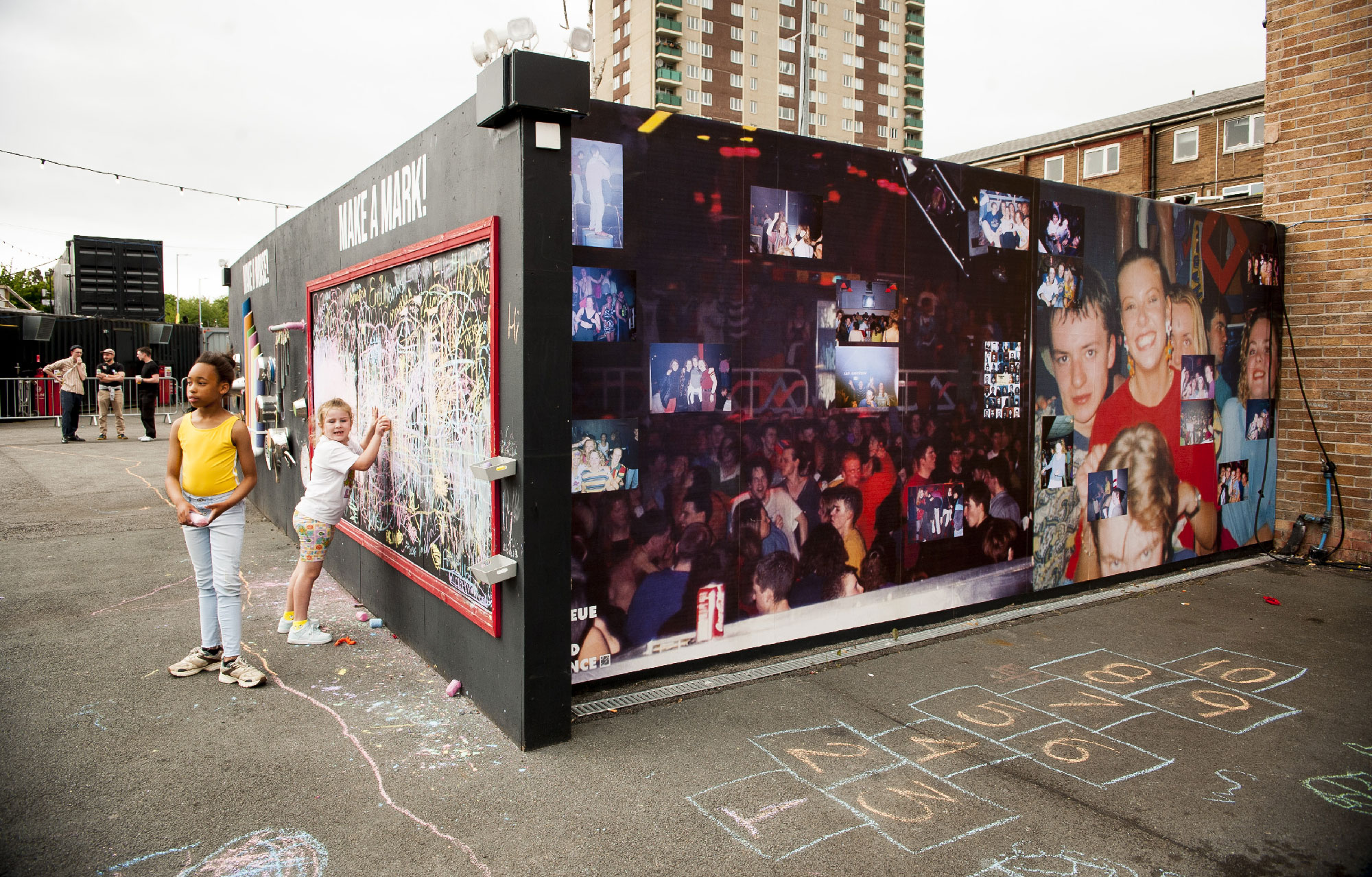
One thing that comes across when you speak to anyone who went to the Quad was how big it’s influence was. Even though it was only really active for less than two years, and in an out-of-the-way location, it was, for many, huge. You can also see this in the photos from inside the club – the energy looks unreal. So I kept coming back to scale, and ‘big-ness.’ A photo in a frame, on a wall, simply didn’t feel like it was going to do these images and experiences justice. So for the exhibition it was decided that we would go as big as we could. One of the community came into the library and helped us to pick the best photos from the archive, which was really useful as they picked up on things only a Quad-goer would see. These were then printed as big as we could manage, with image all being well over 2m square. These printed images were then put up around the site along with an amazing timeline that told the story of the club.
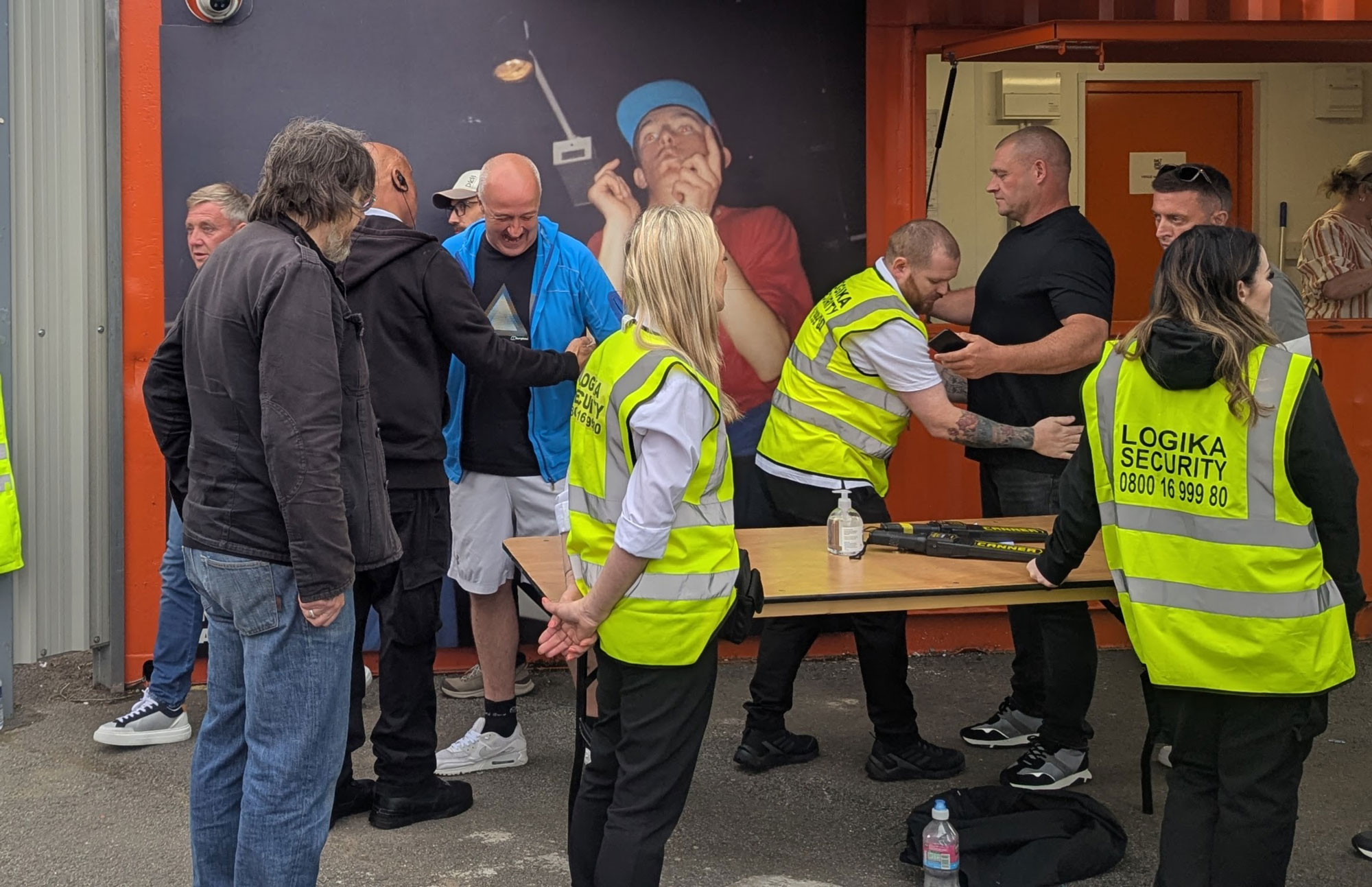
People came during the day to see the images and we also had a community screenprinting stand where people could screen print their own Quad t-shirts, then later in the afternoon the partygoers came to dance. Obviously the images stayed up, and it was great to see a different crowd looking at them, one guy even spotted his 20 year old self in a photo, which must’ve been quite a surprise. The party was amazing, over a thousand tickets were sold and there were hundreds of people dancing to Quad tunes, back in Bootle 35 years later, alongside these amazing, huge photographs. So, it was a great day and the photos remained for the summer and were seen by other crowds, like those at Sefton Pride or the Lionel Ritchie concert in August. The site is closed for redevelopment now, to reopen in 2027, but some of the images are still there and can be seen by passers by.
The final piece of the project was my own contribution as an artist. Over the last couple of year I have become interested in the voice and vocal systems, so initially I wanted to do something with sound, but the deeper I got into the project, the less appropriate it felt to work in this way. I had been thinking about how ephemeral of this material was, like digitised mixtapes and scanned photos, and the loss of the building itself so soon after the club closed. It felt more fitting to make something physical, and again, quite big. Obviously the part of the archive that was also missing was the stories of those who went. We had lots of images but we also wanted to collect memories too. The idea was floated to make a book, full of interviews with people who went to the Quad. And not short interviews, or soundbites, either, something longer, that gave the participants the chance to tell their stories of the Quad, but also share a bit of what life was like in Liverpool back in the early 90’s. So we set off to collect 20 half hour interviews with a range of people, transcribe and edit them, before putting finally them into book form alongside some photos and flyers from the archive.
This process evolved very organically, we would speak to one person who would put us in touch with another. Andy Carroll provided us with some amazing contacts that helped us widen the scope of the book to include people who had traveled up to the Quad from London. We spoke to DJ’s, clubbers, doormen, journalists, dancers, dealers, and more. People in their 50’s and 60’s are busy, as I said, so we had to go to speak to them wherever they were, so these interviews were done over the phone, in cafes, in libraries, on Teams, at work, and more. We had a set of questions organised to help to the interviewee to set the scene of their lives before talking about the club, but sometimes we digressed, and that was usually fine. I couldn’t write the definitive story of the club, and we quickly realised that the Quad was important to lots of people in lots of different ways, so the breadth of the interviews ended up being really important. I think that the resulting body of interviews does give a really rich description of the club from lots of different perspectives and paints a partial picture of what it was like to be a young working class adult in the early 1990’s.
The whole thing was put into context really well with an introduction by Emma Warren, who we arrived at via her great book ‘Dance Your Way Home. A Journey Through the Dance Floor’. She was super generous and brought a really useful, slightly zoomed out, perspective. The fact that she was clubbing around the North West around the same time, but also had never been to the Quad, and has this amazing understanding of ‘the dance floor,’ meant she could set the scene and celebrate the club in a really unique way. The interviews were book ended by Emma’s introduction at the beginning and Melissa Kain’s after word at the end. Melissa, who grew up in Liverpool, is a DJ, and founded Sisu Crew, a collective that supports female and non-binary artists to access the music industry. Melissa was born after the Quad closed, so she brought another perspective, reflecting on what has changed since and what has stayed the same. I love how, thanks to her, the last word in the book is ‘future’.
I have to add that as a young person, growing up as part of a working class family in the 1980’s, my horizons were quite limited. My life didn’t lack much, but I didn’t think too much about what was beyond my immediate experience. The music industry was miles away, fashion and the art world was miles away, everything was distant and I couldn’t ever really imagine myself as part of any of it. Ever since, I’ve been in awe of anyone who is from a similar background but can see beyond their experiences, and has the nous and determination to make something actually happen in those far away places. Working on this project has brought me into contact with loads of people like this. Andy Carroll, John Kelly, Mike Knowler, Jayne Casey, Tim Reeves, Nicky Trax, Anthony Donnelly, all these people made something amazing happen through their love of the music and willingness to take a few risks. A whole culture and industry emerged in the UK thanks to these people and others like them. That was amazing to hear about, and I think it fed into my motivation to force the book into reality. Lots of the stories wouldn’t usually get into print, but I don’t know why not, as they’re are full of passion, excitement and adventure. I’m clearly biased, but as well as being a useful historical document the Queue Up And Dance book is also a really good read.
Thanks to Paul King for the main page image.